How Long Can a Portable Power Station Run a Fan?
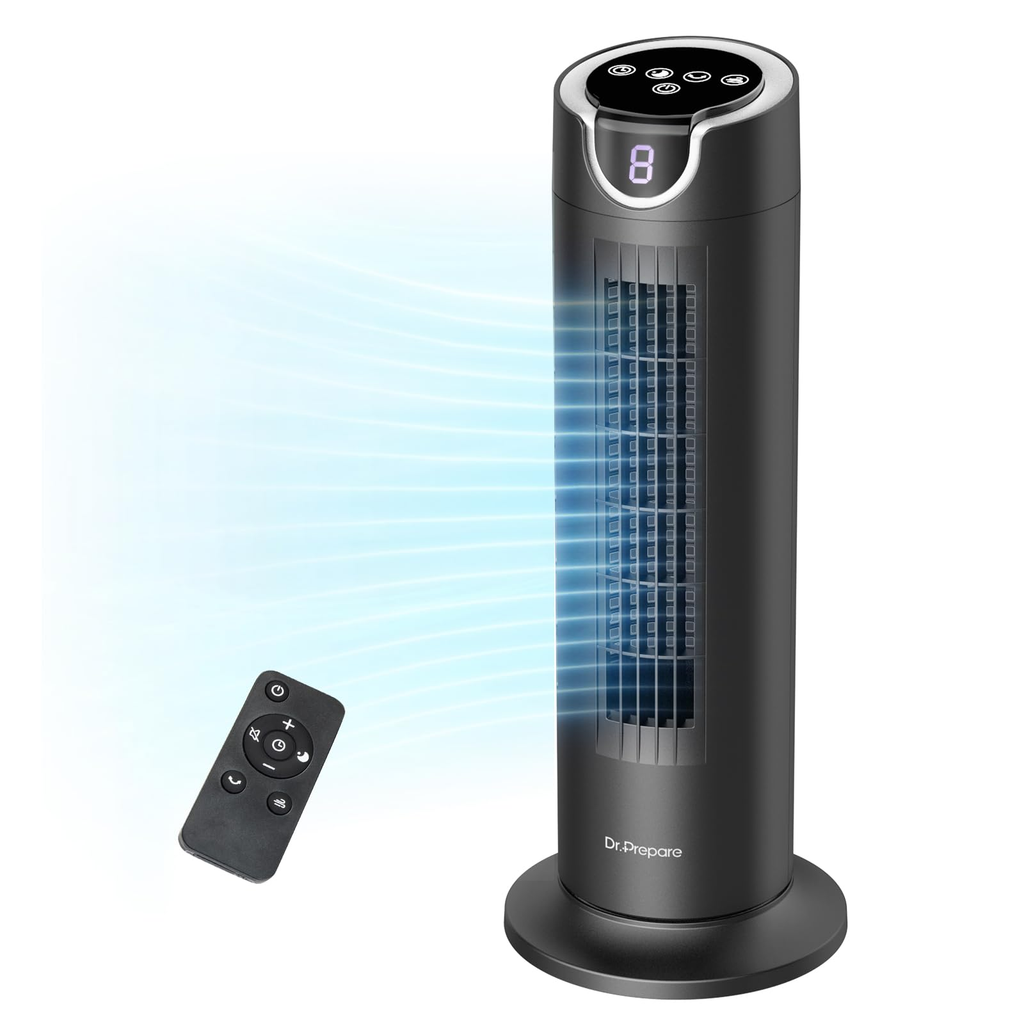
A fan is one of the lightest loads most people ever put on a portable power station, which is exactly why the simple watt-hour division taught in most sizing guides gives a misleading answer here. This guide works through the real number, including the one factor that matters far more for a 30 watt fan than it ever does for a refrigerator or a laptop: the power station’s own inverter overhead.
Quick Answer
A power station with 300 to 1,000 Wh of capacity will typically run a household fan (roughly 20 to 100 W) for somewhere between 2 and 40 hours, depending on the fan’s wattage, the unit’s usable capacity, and how much power the inverter itself draws just to stay on. For a mid-size example: a 500 Wh power station running a 50 W tower fan through its AC inverter delivers approximately 6.5 to 8 hours of practical runtime, not the 10 hours a naive Wh / W calculation suggests.
The formula:
Runtime (hours) = Usable energy (Wh) / (Fan power draw (W) + inverter idle draw (W))
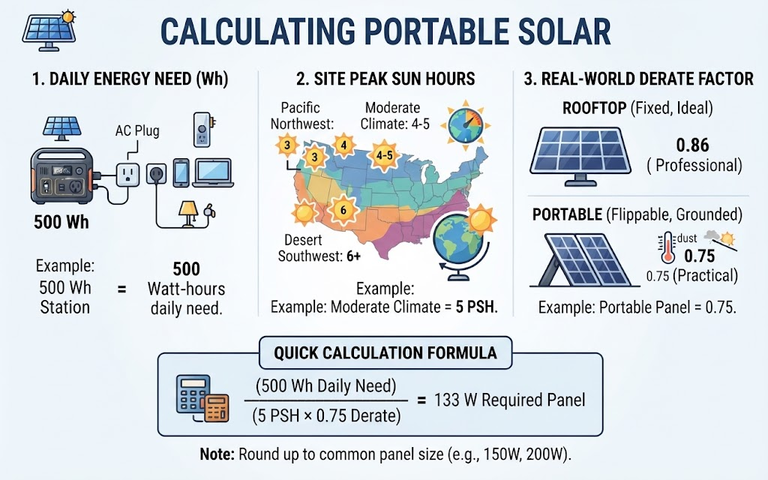
Usable energy is calculated as rated capacity x 0.80 (accounting for approximately 95% depth of discharge and roughly 85% inverter efficiency), the same derating factor used in our guide to calculating portable power station runtime. Inverter idle draw is the continuous power the inverter consumes just to keep an AC outlet live, typically 5 to 20 W depending on the unit’s size and design.
How Much Power Does a Fan Actually Use?
Fan wattage varies more by type and speed setting than most people expect. The table below summarizes typical running wattages for common household and portable fan types, consistent with the ranges reported in Renogy’s fan energy cost guide.
| Fan type | Typical running power | Notes |
| Small desk / USB fan | 4-20 W | DC motor, low draw even on high speed |
| Tower fan | 30-100 W | Oscillation and ionizer features add a few watts |
| Box fan | 40-100 W | Older AC-motor units sit at the high end |
| Pedestal / stand fan | 50-100 W | Draw rises sharply between speed settings |
| Ceiling fan | 15-90 W | Modern DC-motor models often run near 30 W on medium |
Table 1. Typical running wattage by fan type. Actual draw depends on the specific model, blade size, and speed setting; check the fan’s own label for its rated wattage before sizing.
These are running watts, not starting current. Fans use small motors and generally do not have a meaningful startup surge the way a compressor or pump does, so, unlike the continuous power versus surge power distinction that matters so much for refrigerators and pumps, surge power is rarely the limiting factor when running a fan from a portable power station.
The Basic Runtime Calculation
Start with the simplified formula that most guides stop at:
Runtime (h) = Usable energy (Wh) / Fan power (W)
Using the standard 0.80 usable-energy derating factor (95% depth of discharge x 85% inverter efficiency) established in our battery capacity for portable power stations guide:
| Power station | Usable energy (0.80 factor) |
| 300 Wh | 240 Wh |
| 500 Wh | 400 Wh |
| 1,000 Wh | 800 Wh |
Table 2. Usable energy at the standard 0.80 derating factor.
Dividing usable energy by a 50 W tower fan gives 4.8 hours from a 300 Wh unit, 8 hours from a 500 Wh unit, and 16 hours from a 1,000 Wh unit. These numbers are directionally useful but consistently overstate real-world runtime for one specific reason that matters more here than in almost any other portable power station calculation.
Why Fans Are a Special Case: Inverter Idle Draw
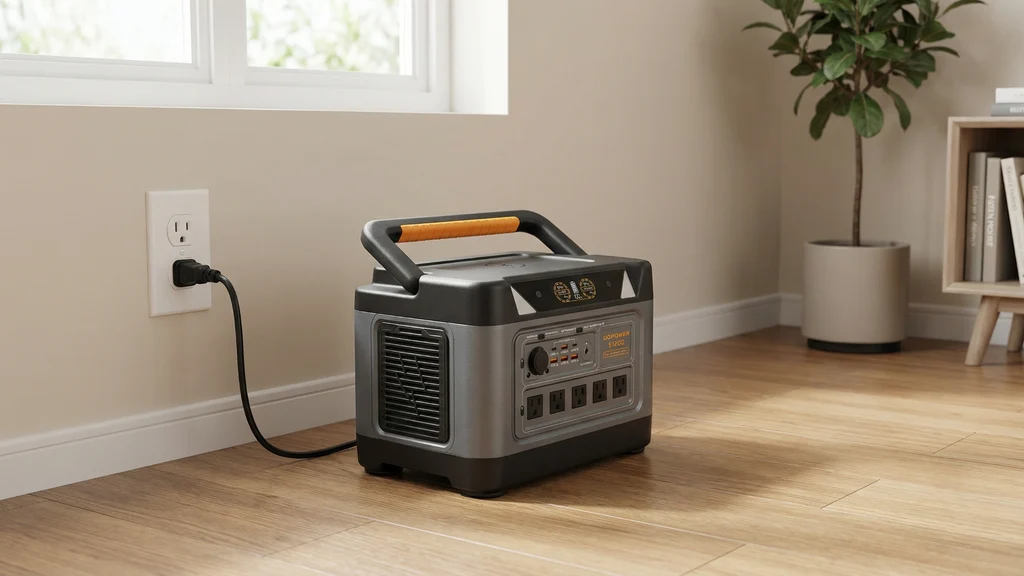
A portable power station’s AC inverter does not switch off between load changes. As long as the AC outlet is enabled, the inverter continuously converts DC battery power into 120V or 230V AC, and that conversion process consumes power on its own, independent of whatever is plugged in. This is called idle draw, no-load draw, or inverter self-consumption, and, as Portable Energy Lab’s explanation of inverter idle consumption describes, it typically runs 5 to 20 W depending on the size and design of the unit; larger inverters in the 1,000 Wh-plus class tend to sit toward the higher end of that range, while more efficient smaller units can be lower.
For a refrigerator drawing 100 to 150 W continuous, or a space heater drawing 1,000 W, a 10 W idle draw is a rounding error. For a fan drawing 20 to 50 W, it is not. Idle draw of 10 W added to a 20 W desk fan increases the effective load by 50%, and the runtime estimate has to account for that.
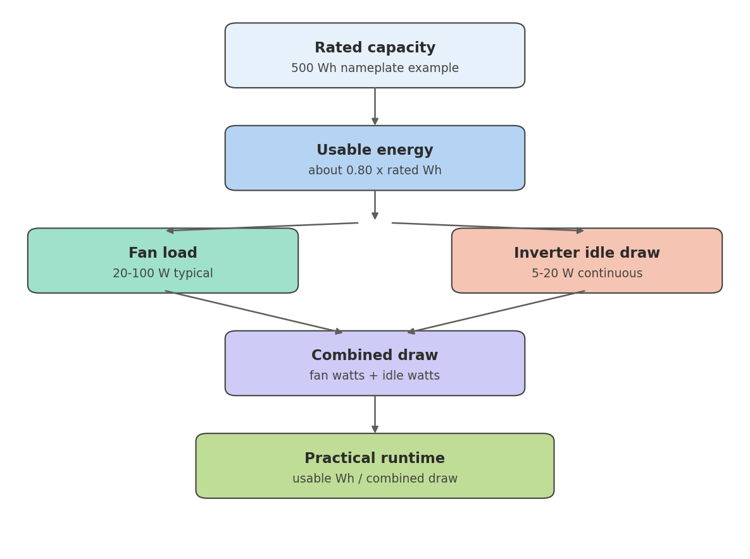
Figure 1. Energy flow from rated capacity to practical fan runtime. Idle draw is added to the fan’s own load because the inverter consumes it continuously, not only when the fan is running at full speed.
The corrected formula accounts for this directly:
Runtime (h) = Usable energy (Wh) / (Fan watts + Idle watts)
Worked Examples: Runtime by Power Station Size and Fan Type
The table below applies the corrected formula across three common power station capacities and three fan types, using representative idle draw figures of 6 W for a 300 Wh-class unit, 10 W for a 500 Wh-class unit, and 13 W for a 1,000 Wh-class unit. These idle draw values are illustrative examples based on published ranges for portable power stations in each capacity class, including real-world figures reported in this DIY Solar Forum discussion of standby power consumption across several consumer models; actual idle draw varies by model, and the specification sheet or an independent review is the authoritative source for a specific unit.
| Power station | Fan type | Fan watts | Idle watts | Practical runtime |
| 300 Wh | Desk fan | 20 W | 6 W | 9.2 hours |
| 300 Wh | Tower fan | 50 W | 6 W | 4.3 hours |
| 300 Wh | Box fan | 90 W | 6 W | 2.5 hours |
| 500 Wh | Desk fan | 20 W | 10 W | 13.3 hours |
| 500 Wh | Tower fan | 50 W | 10 W | 6.7 hours |
| 500 Wh | Box fan | 90 W | 10 W | 4.0 hours |
| 1,000 Wh | Desk fan | 20 W | 13 W | 24.2 hours |
| 1,000 Wh | Tower fan | 50 W | 13 W | 12.7 hours |
| 1,000 Wh | Box fan | 90 W | 13 W | 7.8 hours |
Table 3. Practical fan runtime including inverter idle draw. Calculated as usable Wh divided by (fan watts + idle watts).
Two patterns are worth noticing. First, the smaller and lower-wattage the fan, the larger the percentage penalty idle draw imposes: a 20 W desk fan loses roughly a third of its naive runtime estimate to idle draw, while a 90 W box fan loses closer to a tenth. Second, moving to a larger power station does not proportionally extend runtime as much as the Wh numbers alone suggest, because larger units generally carry a somewhat higher idle draw in absolute watts.
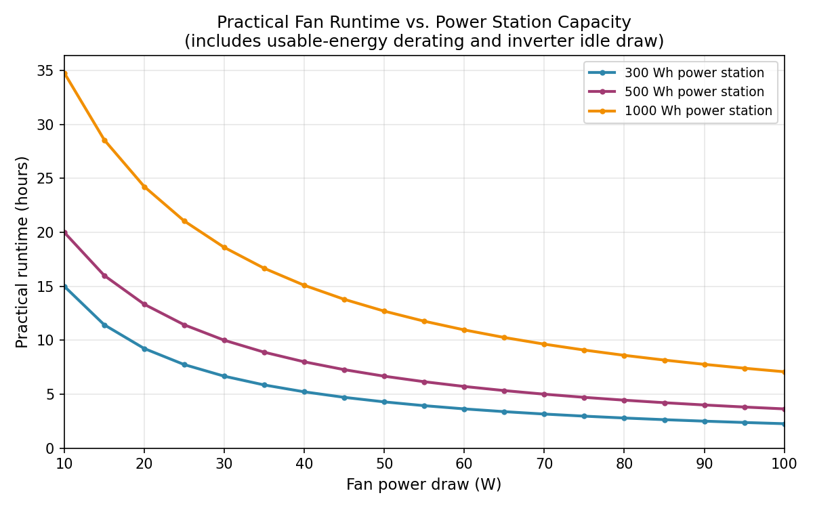
Figure 2. Practical runtime versus fan power draw for three power station capacities, including the usable-energy derating factor and representative inverter idle draw for each capacity class.
Running a Fan on DC Power Instead of AC
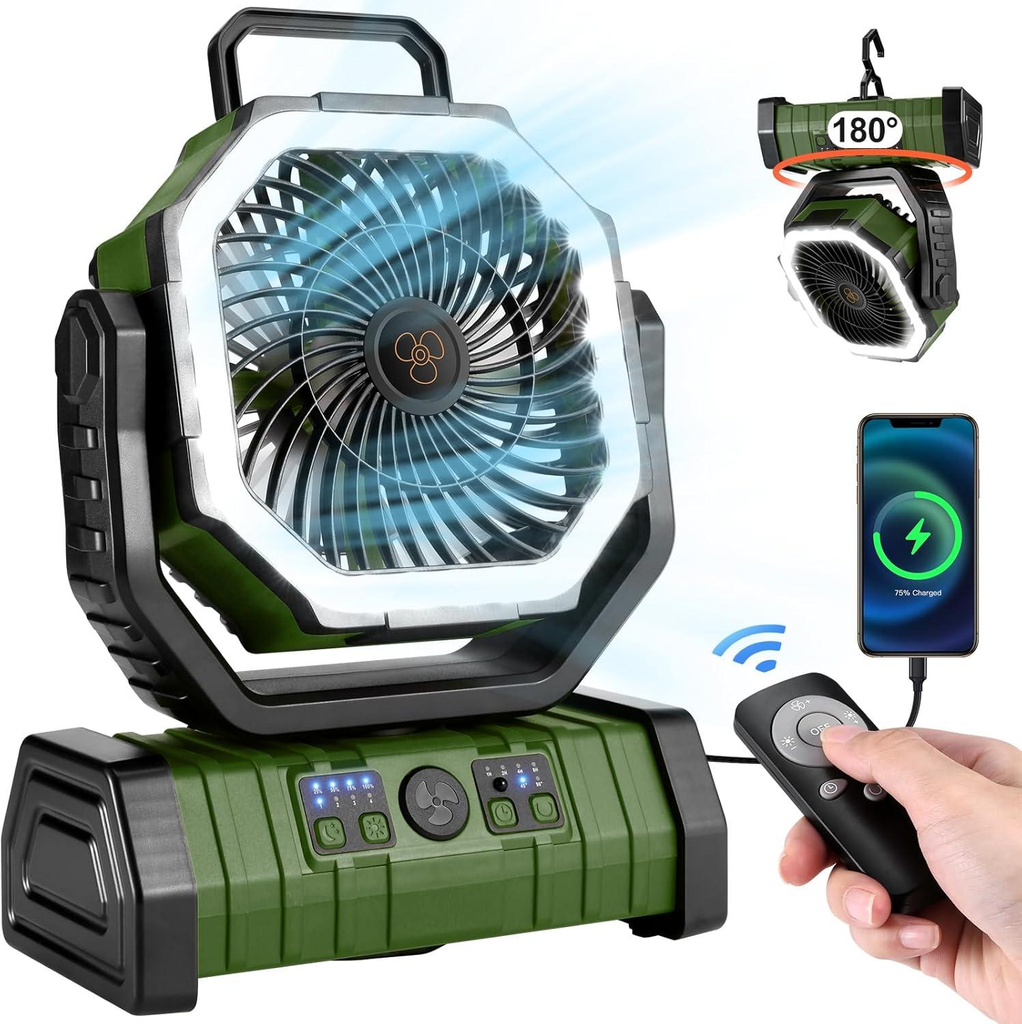
Many portable camping and USB fans can run directly from a power station’s 12V DC output or USB-C port instead of through the AC inverter, bypassing the battery-to-AC-outlet conversion path described in our explanation of how portable power stations work. This matters more than it might seem, because it removes both sources of loss discussed above: there is no AC inverter idle draw at all when the AC outlet is switched off, and DC-to-DC conversion is typically more efficient than DC-to-AC inversion.
As an illustrative example: a 10 W DC fan powered from a 300 Wh unit’s 12V port, with a usable-energy fraction closer to 0.90 (accounting for depth of discharge and a smaller DC conversion loss, with negligible standby draw on the DC port) would run for roughly 27 hours, compared to a similarly rated fan drawing power through the AC inverter with its idle draw included. The practical takeaway: for overnight or extended fan use where every watt-hour counts, a DC-powered fan on a 12V or USB-C output is meaningfully more efficient than an AC fan plugged into the inverter, even at a comparable running wattage.
This is not universal. Many household box, tower, and ceiling fans are AC-only and have no DC option, in which case the AC inverter path is the only one available and its idle draw is unavoidable.
Common Mistakes When Estimating Fan Runtime
Using the fan’s maximum wattage as a constant
Most fans draw meaningfully less power on low or medium speed than on high. A fan rated at 60 W on high may draw closer to 25 to 30 W on low. Runtime estimates built entirely on the nameplate maximum understate real-world runtime for anyone who does not run the fan at full speed continuously.
Ignoring inverter idle draw entirely
As shown above, this is the single largest source of error when estimating fan runtime specifically, because fan loads are small enough for idle draw to represent a large fraction of total consumption.
Assuming 100% of rated capacity is usable
Manufacturers rate capacity at the battery cell level, before accounting for the depth of discharge the battery management system allows and the losses inherent in DC-to-AC conversion. The 0.80 usable-energy factor used throughout this article reflects that gap; treating the full nameplate Wh as available runtime capacity consistently overestimates the result.
Forgetting that other loads may share the battery
If a phone, light, or router is charging from the same power station at the same time as the fan, that additional load subtracts directly from the fan’s available runtime. The calculations in this article assume the fan is the only active load.
Frequently Asked Questions
Will a 300 Wh power station run a fan all night?
For a low-draw desk or DC fan (10 to 20 W), yes; a 300 Wh unit can generally cover 8 to 12 hours once idle draw is included, which spans a typical night. For a higher-draw box or pedestal fan run at full speed (80 to 100 W), a 300 Wh unit will likely fall short of a full 8-hour night and closer to 2.5 to 3 hours should be expected.
Does fan speed meaningfully change runtime?
Yes, substantially. Because idle draw is fixed regardless of fan speed, running a fan on low instead of high both reduces the fan’s own draw and reduces the relative share that idle draw represents, compounding the runtime improvement. Running a fan on its lowest usable speed is one of the most effective ways to extend runtime from a given power station.
Is a bigger power station always the better choice for running a fan?
Not automatically. A larger unit provides more total watt-hours, but if its idle draw is also higher in absolute terms, some of that extra capacity is spent keeping the inverter running rather than powering the fan. For a fan-only use case, a smaller unit with a genuinely low idle draw can sometimes outperform a larger unit with a higher one on a per-watt-hour basis, particularly for extended low-wattage use.
Conclusion
The simple watt-hour division gets the right order of magnitude, but for a load as light as a fan, inverter idle draw is not a rounding error, it is a meaningful fraction of total consumption. A realistic runtime estimate accounts for usable energy after the standard 0.80 derating factor, adds the power station’s own continuous idle draw to the fan’s running wattage, and, where the fan supports it, considers running it from a DC port to avoid the AC inverter’s overhead altogether.
For most households, a 500 Wh to 1,000 Wh power station comfortably runs a fan through a multi-hour outage or an overnight camping trip; a smaller 300 Wh unit is workable for a lower-draw fan but is a tighter fit for a full-speed box fan run through the night.
For guidance on matching overall capacity to a household’s full backup needs, see what size portable power station do I need. For a heavier continuous load with a very different idle-draw calculus, our portable power station refrigerator runtime guide works through the same formula at a scale where idle draw matters far less.